Loading...
Serving Wilkes-Barre, PA and surrounding areas. (272) 447-0191
Adding a garage, sunroom, or new structure? A properly built slab foundation is the starting point. We handle permits, site prep, and cold-weather protection so your slab cures correctly every time.
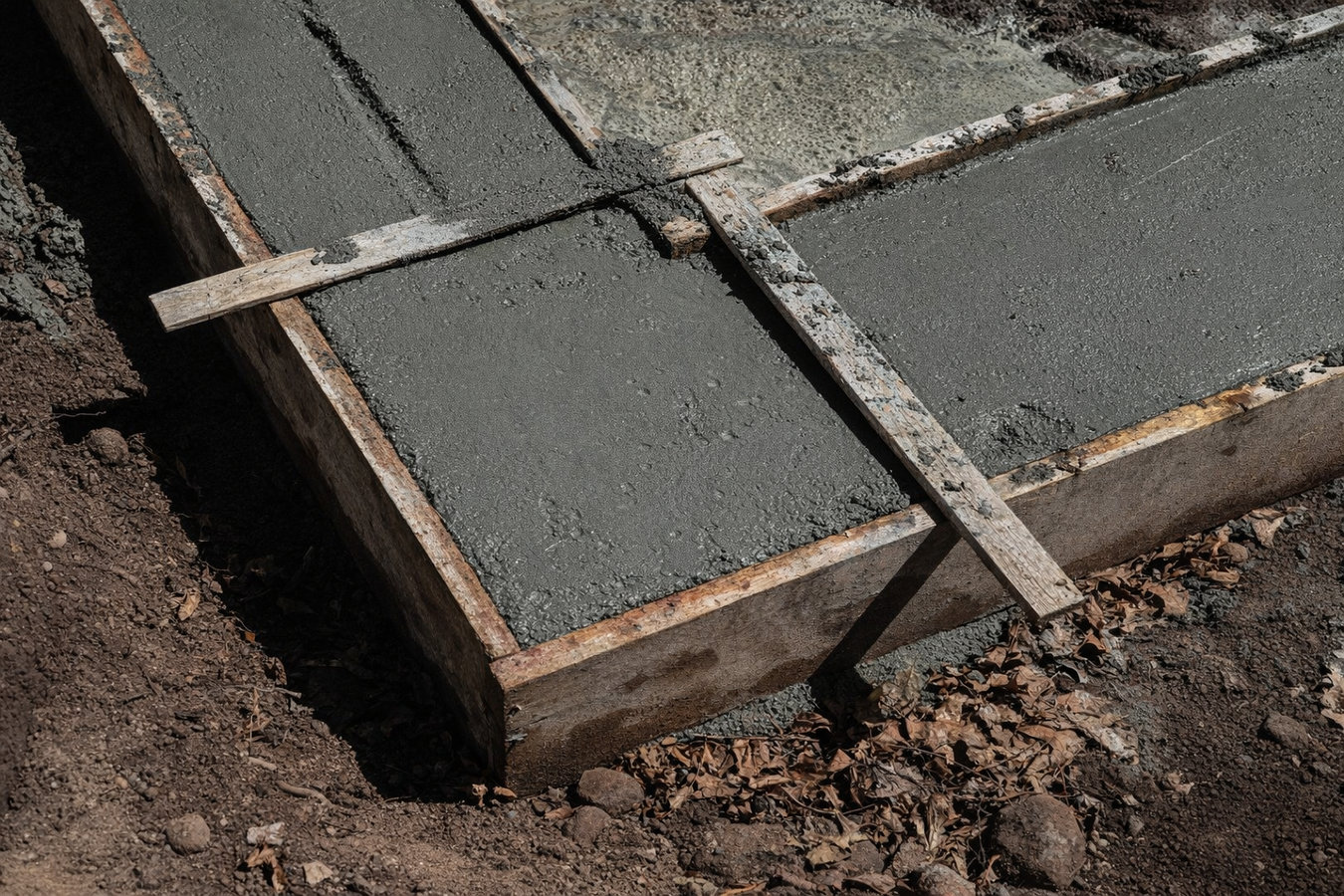
Slab foundation building in Wilkes-Barre means pouring a reinforced concrete pad directly on prepared ground, with steel rebar or wire mesh inside, a compacted gravel base below, and control joints cut across the surface - most residential garage or addition slabs take one to three days of active work, then a curing period before framing begins.
If you are planning to add a detached garage, a workshop, or a sunroom to your Wilkes-Barre home, the slab is the first thing that has to be right. Soil conditions in the Wyoming Valley vary from riverbed silt near the Susquehanna to clay-heavy hillside lots - and that variation changes how much base preparation your project needs. For projects that go beyond a basic slab, we also handle foundation installation for full basement and crawl space builds, and concrete footings for structures that need isolated support columns.
The work you cannot see after the pour - the gravel base, the reinforcement, the moisture barrier - is what determines whether your slab performs for decades or starts cracking within a few years. We walk every site before we quote because what is actually in the ground matters more than a standard estimate.
Portland Cement Association has detailed guidance on residential slab thickness requirements and curing best practices.
If you are planning to add a detached garage, a workshop, or any structure that will sit on the ground, you need a slab foundation before framing can begin. Many Wilkes-Barre homeowners with older properties are adding these structures as their families grow or their needs change. The project simply cannot move forward without the concrete first.
Hairline cracks in concrete are normal, but cracks wider than a quarter inch, or where one side sits higher than the other, are a sign that something is moving underneath. In Wilkes-Barre, this kind of movement can sometimes be traced to mine subsidence activity or to clay soils that have shifted through repeated wet and dry cycles. It is worth having a contractor look before the problem worsens.
If water pools in one area of your garage floor, or a ball rolls consistently in one direction, the slab may have settled unevenly. The whole surface may look intact but the ground underneath has moved. In areas of Wilkes-Barre with known mine activity or soft river-valley soils, uneven settling is more common than in other parts of the state.
Some older slabs - particularly those poured before modern reinforcement practices were standard - reach a point where patching no longer makes sense. If the surface is flaking in large sections, if there are multiple large cracks running in different directions, or if the slab has heaved significantly, a full replacement is often more cost-effective. Many Wilkes-Barre mid-century homes have garage slabs approaching this point.
Every slab project starts with a site visit to assess soil conditions and access before we give you a price. We handle the permit application through the City of Wilkes-Barre, coordinate the pre-pour inspection, and prepare the base with properly compacted gravel and a moisture barrier. Steel rebar or welded wire mesh goes in before the concrete is ever ordered. For homeowners who want decorative finishes on their slab surface, we can combine foundation work with our concrete footings service for isolated column supports, or with foundation installation for full below-grade basement or crawl space builds.
We cut control joints into the finished surface so any shrinkage cracking happens where it is supposed to - in the joint, not across your floor. In cold weather, we use insulating blankets to protect the curing concrete from frost. After the curing period, we walk you through the finished slab before closing out the permit.
Suits homeowners adding a detached garage, carport, or workshop to an existing property.
Suits homeowners extending their living space and needing a matched floor height at the transition.
Suits owners of older Wilkes-Barre homes with deteriorated or unreinforced original pads.
Wilkes-Barre sits in the Wyoming Valley, and the ground here is not the same from one block to the next. Near the Susquehanna River, soils are often river-deposited silt that compresses more easily under load. On the hillsides in neighborhoods like the Heights, clay-heavy soil expands when wet and shrinks when dry, which puts cyclical stress on any slab that was not set up with proper drainage. And on properties throughout the city that sit above old mine workings, a standard slab design may not be enough without first checking the subsidence risk maps maintained by the Pennsylvania Department of Environmental Protection. We do that check as part of every site visit before we quote. Homeowners in Kingston face similar river-valley soil conditions, and we serve that area regularly.
Wilkes-Barre winters also matter for slab projects in a way that does not apply in warmer states. Concrete poured in November through March can freeze before it fully cures, permanently reducing its strength - and that damage is not reversible. We plan projects around the seasonal window that makes sense here and use the right cold-weather protection when needed. Homeowners in Scranton face the same freeze-thaw risk, and every slab we pour in that area gets the same cold-weather planning.
We respond within 1 business day to schedule a free site visit. During the visit we assess soil conditions, access, and the size of the slab you need - everything that affects the actual price.
You receive a written price that accounts for what we actually found on your site. We file the building permit with the City of Wilkes-Barre before any work begins - you do not need to make a single call to the city.
The crew excavates to the correct depth, compacts gravel, and lays the moisture barrier. Forms are set around the perimeter and steel reinforcement is placed inside. The inspector visits before the concrete is ordered - this step protects you by verifying the hidden work before it gets covered.
Concrete is delivered and poured in one continuous operation. Control joints are cut into the surface. The slab then cures for at least seven days before light traffic and longer before heavy loads. We walk you through the finished slab and close out the permit before we consider the job done.
We respond within 1 business day. No obligation to move forward. After you submit, someone from our office will call to schedule a free on-site estimate and walk your property before giving you a price.
(272) 447-0191We file the building permit with the City of Wilkes-Barre and schedule the pre-pour inspection on your behalf. Unpermitted slab work is one of the most common issues that surfaces during home sales in Luzerne County - our process ensures your slab is fully documented from day one.
Before we design any slab in the Wyoming Valley, we check whether the property falls in a mapped mine subsidence risk zone. Properties that do may need reinforced slab designs or additional soil assessment. Most contractors skip this step - we do not, because what is under the ground matters as much as what we pour.
Wilkes-Barre winters are cold enough to permanently damage fresh concrete that freezes before curing. When temperatures require it, we use insulating blankets and schedule pours during appropriate windows. Your slab gets the same strength whether it is poured on a warm spring day or a cold October morning.
We have been building slabs for Wilkes-Barre homeowners since 2024, which means we know what the soil actually looks like in different parts of the city - from river-valley silt near the Susquehanna to the clay-heavy hillside lots in other neighborhoods. That local knowledge changes how we prepare the base before a single yard of concrete is ordered.
Every slab we pour is backed by a site visit, a written price, and a permit inspection - not a drive-by estimate and a handshake. That process takes a little more time upfront, and it is why our slabs do not come back with problems in year two or three.
When your project needs a full basement or crawl space rather than a slab, we build below-grade foundations permitted and inspected through the city.
Learn MoreFor structures that need isolated column or post supports rather than a continuous slab, we form and pour individual footings to the correct frost depth.
Learn MoreSlab schedules fill up fast in spring - contact us now to lock in your project window and avoid delays on your build.